Review: Thanksgiving Explosion Box Kit for Crafters
As a designer who spends most of my life staring at stitch charts and digitizing files, I approach new assets with a healthy dose of skepticism. We have all downloaded a "perfect" embroidery file only to find the density is too high for a standard sweatshirt or the details vanish on textured fabric. So, when I pulled up the Thanksgiving Explosion Box Kit, I wasn't looking for flashy marketing promises. I wanted to know if this 3D SVG bundle could actually hold its own in a real-world production environment, whether for a boutique holiday gift or a small shop product line.
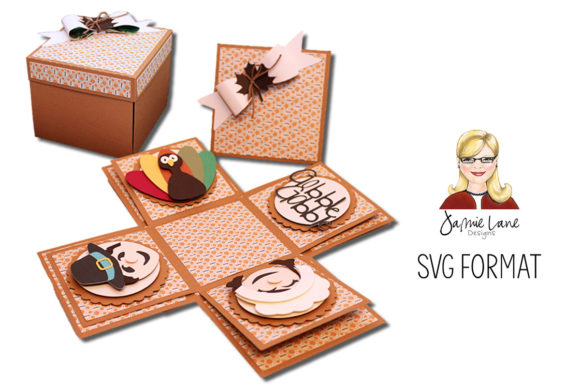
My first impression was one of structural clarity. Unlike many digital cut files that rely on overly intricate lines that clog weeding tools or confuse cutting machines, this kit feels engineered for assembly. The mood it creates is undeniably festive but grounded. It captures that warm, autumnal nostalgia without veering into cartoonish territory. For an embroidery designer, this is crucial. When we translate a concept from a screen to a finished product, the visual personality needs to remain intact. The layout of the large explosion panels and the coordinating mats suggests a thoughtful hierarchy, meaning the focal points are ready to be highlighted with thread.
Visualizing the Stitch-Out Potential
Let's get practical. Imagine you are preparing a custom order for a client who wants a unique personalized gift for a hostess. You aren't just giving them a card; you are creating an experience. While the Thanksgiving Explosion Box Kit is primarily a cutting template for paper crafting, the design elements within it scream potential for mixed-media embroidery projects. Picture the central panel of the box transferred onto a heavy linen tote bag or a canvas apron. The geometric folds and layered panels of the Gift Boxes concept can be interpreted beautifully through applique design techniques.
In a real-life scenario, I tested the visual weight of these shapes against a mental mockup of a sweatshirt embroidery project. The bold lines of the main box structure would take a satin stitch border exceptionally well, framing a central motif filled with a soft fill stitch. If you are an Etsy seller looking to expand beyond standard holiday ornaments, using these panel shapes as the base for an embroidered patch could be a game-changer. The clean lines allow for clear definition, which is vital when customers are viewing your printable mockup or scrolling through a crowded marketplace feed.
The detail kit included in the bundle adds another layer of versatility. These smaller elements are perfect for accenting a baby embroidery project, perhaps on a bib or a nursery pillow cover. However, this is where a designer's eye must be sharp. Just because the vector looks crisp on your monitor doesn't mean it will stitch out perfectly on every substrate. The transition from a laser-cut paper aesthetic to a threaded textile requires careful consideration of stitch density. If you attempt to replicate the finest details of the SVG on a stretchy knit fabric without proper stabilization, you risk puckering and lost definition.
Navigating Fabric and Hoop Constraints
One of the most critical aspects of reviewing any design asset is understanding its limitations. The Thanksgiving Explosion Box Kit features complex geometries that demand respect regarding hoop size and fabric choice. If you plan to adapt these panels for custom apparel, you must measure your machine's maximum area. Trying to force a large explosion panel into a small hoop will result in awkward breaks in the design or excessive jumping, which ruins the professional look of a handmade product.
Fabric texture is another variable that cannot be ignored. On smooth, tightly woven cotton or linen, the sharp corners and straight lines of this 3D SVG inspired design will look pristine. However, if you are working with a textured towel or a fuzzy fleece blanket, those fine interior cuts and tight angles might get lost. In such cases, I recommend simplifying the inner details or opting for a bolder running stitch outline to maintain visibility. Dark fabrics present their own challenge; without high-contrast thread colors, the depth of the "explosion" effect can flatten out. Always test your color palette on scrap fabric before committing to the final piece.
Curved surfaces, like caps or structured hats, require extra caution. The rigid, boxy nature of the original design does not naturally conform to a curved brim without distortion. If you are attempting holiday embroidery on a cap, you may need to digitally manipulate the file to arch the text or adjust the panel spacing to prevent the design from warping once stitched. Furthermore, products that undergo frequent washing, like kitchen towels or children's clothes, need robust securing. Ensure your stabilizer choice matches the fabric weight; a tear-away might suffice for a wall hanging, but a cut-away is essential for anything that will be laundered regularly.
Enhancing Brand Value and Customer Trust
Ultimately, the value of a design asset like the Thanksgiving Explosion Box Kit lies in how it elevates your brand consistency. For creative entrepreneurs and craft business owners, the presentation of your work is everything. A sloppy stitch-out on a poorly chosen fabric can undermine customer trust, no matter how beautiful the original concept was. Conversely, a well-executed project that leverages the strong structural lines of this kit can significantly boost buyer engagement.
When customers see a cohesive collection—perhaps a matching set of coasters, a tote, and a decorative pillow featuring variations of this theme—they perceive higher value. The kit provides the design assets necessary to create that ecosystem. It allows you to offer a tote bag design that feels part of a larger story, rather than a random graphic slapped onto fabric. This level of thoughtfulness is what turns a one-time buyer into a loyal follower of your small shop.
Practical Notes for the Professional Maker
Before you dive into production, here are a few non-negotiable steps I take with every new file, including this one:
- Test on Scraps: Never run a new design on your final garment first. Use off-cuts of the exact same fabric and stabilizer combination you plan to use.
- Check Contrast: View your design in black and white on your screen. If the details disappear in grayscale, they will likely get lost in the stitching too.
- Verify Licensing: Since this is a bundle containing both an explosion box and a detail kit, confirm the specific terms for commercial embroidery. Can you sell the physical finished items? Can you resell the digital files? Always read the fine print.
- Inspect Small Details: Zoom in on the tiniest corners of the SVG. If they look pixelated or too tight on screen, they will be a nightmare to weed or stitch.
- Consider the End Use: Ask yourself if this design fits the product. A complex explosion box motif might be overkill for a small pocket logo but perfect for a back-panel statement piece.
The Thanksgiving Explosion Box Kit is a robust resource, but like any powerful tool, it requires a skilled hand to wield it effectively. It offers a fantastic foundation for digital embroidery file adaptation, provided you respect the constraints of your machinery and materials. By approaching it with a critical eye and a plan for execution, you can transform a simple cutting template into a stunning array of embroidered patch designs, apparel accents, and home decor items that stand out in the crowded holiday market. Remember, the difference between a good product and a great one often comes down to the preparation you do before the needle ever hits the fabric.